Learn trading fundamentals and understand how financial markets work
Heather and Rose Health provides practical trading education that focuses on concepts, terminology, market structure, and risk awareness. Use our guides to build a reliable foundation before you place any trade.
- Focus
- Education first
- Style
- Clear definitions
- Outcome
- Better decisions

Learn what open, high, low, and close represent, and how patterns can signal changing market sentiment.
Understand position sizing, stop losses, and why risk control matters more than any single trade idea.
This site is built for learning. We do not ask you to register, deposit, or share sensitive financial information. Our content focuses on explanations and examples you can verify and revisit.
What we do
Heather and Rose Health publishes trading education designed to help readers understand how markets function, what common trading terms mean, and how to evaluate information responsibly. Our goal is to reduce confusion by explaining core ideas such as liquidity, volatility, order types, spreads, and the role of participants like market makers and institutional investors. You will find structured explanations that connect concepts to real market behavior, so you can interpret price movement with greater context.
We focus on clarity and risk awareness. Trading can be complex and outcomes are uncertain, so our material emphasizes process over predictions. When we describe strategies, we explain when they are typically used, what assumptions they make, and what risks they introduce. This helps you compare approaches without relying on hype, shortcuts, or unrealistic expectations. Use the site as a learning reference, then apply any ideas cautiously and only within your own risk limits.
Market structure
Learn how exchanges, brokers, and liquidity providers interact, and how orders move from your screen into the market.
Key terms, explained
Definitions for common concepts like leverage, margin, bid/ask, support and resistance, and risk-reward.
Strategy frameworks
Overview of popular approaches such as trend following, mean reversion, and breakout trading with context and limitations.
Risk-first learning
Practical guidance on position sizing, drawdowns, and why discipline matters when outcomes are probabilistic.
Prefer a guided overview?
Start with how markets work, then review the key terms section to build a shared vocabulary.
BitKeltTdrade START INVESTING OUR BitKeltTdrade PLATFORM — IS EASY TO USE AND HAS BEEN DESIGNED TO HELP BOTH BEGINNERS AND EXPERIENCED INVESTORS INCREASE THEIR INCOME
1 Users can capitalise on market trends to their advantage and improve their success rate and overall performance
2 Our platform, together with our experts, offers a range of features and tools
3 which will help you get started and achieve the results you want.
Important: We provide educational content only. We do not request deposits, we do not provide personalized investment recommendations, and we do not promise outcomes. Always consider risk carefully.

Clarity over complexity
We break down concepts into definitions, examples, and typical pitfalls so you can verify what you learn.
Responsible learning
We explain risk controls and uncertainty so you can avoid taking ideas as guarantees.
About us
Heather and Rose Health is an educational publisher focused on explaining financial market mechanics in plain English. We build learning materials around consistent definitions and careful examples, so readers can develop a shared understanding of how pricing, orders, and liquidity interact. Our content is written to be accessible to beginners while still useful as a reference for experienced readers who want a clean refresher on fundamentals.
Our editorial approach prioritizes accuracy, neutrality, and responsible communication. We avoid sensational claims, avoid pressure language, and avoid encouraging any specific action. When we discuss strategies, we frame them as educational frameworks that require testing, risk controls, and personal suitability assessment. Our aim is to help you ask better questions, interpret information more critically, and understand the tradeoffs present in real markets.
What you will find
- Market structure and order flow basics
- Key terms with examples and common mistakes
- Strategy overviews with risk considerations
What you will not find
- Promises of income or performance
- Pressure to register or deposit
- Personalized investment advice

How the market works
Markets connect buyers and sellers through orders. Prices move when available liquidity changes, when new information arrives, or when participants adjust risk. Understanding the mechanics helps you interpret charts more realistically.
Orders, bids, and asks
The bid is the highest price buyers offer, and the ask is the lowest price sellers accept. The spread reflects liquidity and transaction costs.
Liquidity and volatility
Highly liquid markets typically have tighter spreads and smoother execution. Low liquidity can increase slippage and widen moves.
Sessions and catalysts
Economic releases, earnings, and policy announcements can change expectations quickly. Timing and session overlaps can affect volatility.
Trends and ranges
A trend describes directional movement over time. Ranges occur when price oscillates between zones of supply and demand.
Market data and charts
Charts summarize historical transactions. They do not predict outcomes by themselves, but they help you visualize structure and risk.
Execution and risk control
Execution quality depends on volatility and liquidity. Risk controls like stop losses and position sizing define how much a single trade can cost.
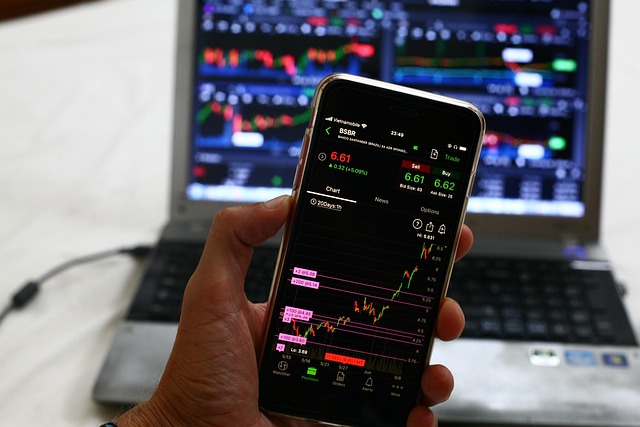
Key trading terms explained
Trading vocabulary can be a barrier. This glossary-style overview explains frequent terms in a way that connects the word to what happens on a chart and in an order ticket. Understanding definitions helps you compare ideas consistently and avoid mismatched expectations.
Bid / Ask (Spread)
The bid is what buyers pay; the ask is what sellers receive. The spread is the difference and acts like an immediate cost of entering and exiting.
Leverage / Margin
Leverage increases exposure relative to your deposit. Margin is the collateral required. Leverage amplifies both gains and losses.
Stop loss / Take profit
A stop loss aims to limit downside if price moves against you. A take profit closes at a target. Neither guarantees exact execution during fast markets.
Volatility
Volatility describes the size and speed of price changes. Higher volatility can create opportunity but also increases execution risk and drawdowns.
Practical tip: When comparing strategy descriptions, check whether the author is discussing entries, exits, position sizing, and execution assumptions. A strategy description without risk rules is incomplete.
Popular trading strategies
Strategies are frameworks, not guarantees. Below are common approaches and what they attempt to capture. A strategy should include clear entry criteria, exit rules, and risk limits, plus realistic assumptions about fees and slippage.
Trend following
Looks for sustained directional movement. Often uses moving averages or structure. Risk: whipsaws in choppy markets.
Mean reversion
Assumes price tends to revert toward an average after extremes. Risk: trends can persist longer than expected.
Breakout trading
Attempts to capture expansion after price leaves a range. Risk: false breakouts and slippage during spikes.
Swing trading
Targets multi-day moves using higher timeframes. Risk: overnight gaps, macro headlines, and carrying costs.

Testimonials
Feedback reflects individual learning experiences and does not imply financial outcomes. We focus on clarity, structure, and responsible education.
Course reader
UK
“The market structure explanations made spreads and execution finally make sense. The risk sections are practical and not salesy.”
Self-directed learner
UK
“I like that the terms are defined clearly and tied to examples. It helped me read other materials with fewer misunderstandings.”
Strategy explorer
UK
“The strategy section explains tradeoffs and limitations instead of pitching a ‘best’ method. That’s exactly what I wanted.”
FAQ
Common questions about trading education, terminology, and responsible learning. If you are looking for a structured overview, start with the market mechanics guide and come back to this page as a reference.
What is the difference between investing and trading?
Investing typically targets longer time horizons and focuses on fundamentals and portfolio construction. Trading often targets shorter horizons and relies more on execution, risk control, and probability. Both involve risk, and neither guarantees results.
Why do spreads widen during news or volatile periods?
When uncertainty rises, liquidity providers may quote less size or protect themselves by widening prices. This can lead to higher transaction costs and more slippage, which matters for short-term trading decisions.
Do candlestick patterns work on their own?
Candlesticks summarize price action, but a pattern is only a description of recent behavior. Many traders combine patterns with context such as trend, key levels, volume, and risk rules, and then evaluate outcomes over a large sample.
What is a reasonable way to start learning safely?
Build a foundation in market structure and terminology, then study risk management basics. If you choose to practice, use small sizes and focus on process: planned entries, planned exits, and predefined maximum risk per trade.
Disclaimer
Trading involves significant risk of capital loss. Past performance does not guarantee future results. This website is for educational purposes only and is not financial advice.